Showing posts with label Tipu Khan. Show all posts

Wednesday, June 6, 2012

MUCH TO CHEER IN PAKISTAN


Some facts for the faint hearted Pakistanis

The Gallup 2012 Well Being survey reports that 20% of Pakistanis say they are "thriving". Even with the high levels of corruption and security situations facing the country, Pakistan still ranks better than their neighbours in Bangladesh (16%) and India (11%).

Pakistan's Stock Markets are booming, hitting new 4-year highs. Share prices are driven by healthy profits and foreign buying, making the KSE-100 the third fastest growing index in the world.

Pakistan’s bustling IT Industry is now worth $2.8 billion and growing. Pakistan also leads the world in biometric IT services with the world’s biggest biometric database.

Today, Pakistan's economy is the 27th largest in the world. As Part of "the Next 11" group of nations, it is one of the top 15 emerging economies (BRIC + Next11). Pakistan will be among the top 20 largest economies in the world by 2020.

Preliminary official estimates are indicating that Pakistan's nominal per capita income has increased by 9% to $1372 in 2011-12 from $1258 in 2010-11.

Pakistan is still a country with significant population of poor people. However, its recent levels of poverty are among the lowest in South Asia. Life expectancy in Pakistan has jumped from 32 years in 1947 to 67 years in 2009. Preliminary estimates are also showing that the poverty rate in Pakistan has declined from 17.2% in 2008 to 12% in 2011.

Literacy is also a very important indicator of progress. Though the literacy in Pakistan has increased from about 10% in 1947 to about 60% today, it remains dismally low relative to many other nations. However, a closer examination of literacy data by age groups shows that the literacy rates are rising by every generation.
Age +55 = 30%
Ages 15 to 25 = 70% (Male 80%, Female 60% - UNICEF)

Enabling virtual education is the high-speed broadband expansion led by PTCL which has propelled Pakistan to become the fourth fastest growing broadband market in the world and the second fastest in Asia, according to a recent industry report. Serbia leads all countries surveyed with a 68% annual growth rate from 2010 to 2011. Thailand (67%), Belarus (50%), Pakistan (46%), and Jordan (44%) all follow Serbia.

Based on hunger data collected from 2003 to 2008, The International Food Policy Research (IFPRI) has reported that Pakistan's hunger index score improved over the last three consecutive years reported since 2008 from 21.7 (2008) to 21.0 (2009) to 19.1 (2010) and its ranking rose from 61 to 59.

The Gallup survey confirms that only 28% of Pakistanis have confidence in their national government which stems from the obvious failure of the state in delivering basic services such as rule-of-law, security and electricity to the people. The best way to improve the well-being of the people is to improve governance, reduce corruption and persuade people to pay taxes to give the state more resources.

While the worst 5% of the Pakistan story gets all the headlines, the reality of Pakistan today as vibrant society and a strong nation gets ignored by the mainstream media. The real story of Pakistan is the resilience of its 180 million citizens who continue to strive to make it better and stronger.

Wednesday, January 4, 2012

DESTINATION PAKISTAN..........Ski Resorts of Pakistan.


The two major Skiing resorts in Pakistan are in Malam Jabba (Swat Valley) and Naltar Valley (near Gilgit). The Malam Jabba Resort was much more developed with a great hotel and all skiing facilitiies but all are destroyed by terrorist and rehabilitation work is underway. However, Naltar requires some work but still is a very beautiful area and lots of snowfall in the winter. There are also 2 ski lifts here and Ski competition is organized regularly by PAF.

Malam Jabba
Malam Jabba is a Hill Station in the Karakoram mountain range nearly 40 km from Saidu Sharif in Swat Valley. Malam Jabba is the most famous ski resort in Pakistan. The area also contains two Buddhist stupas and six monasteries that are scattered around the resort. The presence of the monuments at such a height indicates that the area has been inhabited for over 2000 years.
The Malam Jabba Ski Resort owned by the Pakistani Tourism Development Corporation, had a ski slope of about 800 m with the highest point of the slope 2804 m (9200 ft) above sea level. Malam Jabba Ski Resort was the joint effort of the Pakistan government with its Austrian counterpart. The resort was equipped with modern facilities including roller/ice-skating rinks, chair lifts, skiing platforms, telephones and snow clearing equipment.
In late June 2008, the Malam Jabba Ski Resort was set on fire and destroyed after being closed for more than a year. A large portion of the resort had been reduced to ashes and the militants also damaged chairlifts and a tower belonging to the meteorological department. In May 2009 however the army started an offensive against the Taliban and retook the town. The ski hill at the resort has now been rebuilt and is fully operational. The hotel has undergone reconstruction and rehabilitation.
Malam Jabba is at almost 1 ½ hours drive from Mangora Town in Swat valley. In winters one can easily reach there through jeeps from Mangora

Naltar Valley
Naltar is a valley near Gilgit and Hunza in the Gilgit-Baltistan region of Pakistan. Naltar is 40 km from Gilgit and can be reached by jeeps. Naltar is a forested village known for its wildlife and magnificent mountain scenery. Now the communication is available by the efforts of Pakistan army signal corps. There are ski lifts under the 'Ski Federation of Pakistan'. Transport is available from Gilgit to Naltar.
After Terrorists attack on Malam Jabba, Naltar is rightly called the Home of Skiing in Pakistan. Naltar is the oldest Ski resort of Pakistan at an altitude of 10500 feet. Naltar has Ski slope of almost 600 meters. There is a base camp of Pakistan Air Force (PAF) at Naltar. Ski Competitions are held at Naltar regularly under the supervision of PAF. Pakistan Skiing Federation has installed two lifts at the skiing sites and is also planning to install another one there.

Sunday, December 11, 2011

DESTINATION PAKISTAN........Trekker's Paradise


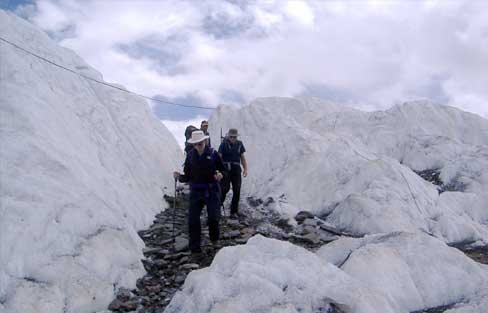
The mountain ranges of Pakistan offer breathtaking, action-packed trekking routes. Pakistan hosts Hindukush, Pamirs, Himalayas and Karakoram, they contain the world's densest concentration of high peaks (five out of 14 highest). There are limitless possibilities for trekking, mountaineering, skiing, and river rafting. Within this alluring arena, the Baltistan region, occupy the central place, with special points of interest for the trekker.

In almost every part of Pakistan, there is a variety of trekking adventure options awaiting the trekker, some soft, others not so. In this vast wonderland, trekking itineraries from one to four weeks or more provide endless opportunities for discovery for the trekker. 

In Pakistan Trekking enthusiast can also explore the rugged beauty of the lofty mountains romancing the sparkling waterfalls. One can experience the thrill of sheer adventure on countless trekking tracks in Pakistan.

The Northern Areas of Pakistan are called Roof of the World . Nowhere in the world is such a great concentration of high mountains, peaks, glaciers, and passes except in Pakistan. Of the 14 over 8,000 meters high peaks on our earth planet, four occupy an amphitheatre at the head of Baltoro Glacier in the Karakoram Range: K-2 (8,611 meters, originally called Chogo-ri which in Balti language means 'king of the mountains,' of all the world's mountains second only to Mount Everest), Gashabrum-I (8,068 meters), Broad Peak (8,047 meters) and Gashabrum-II (8,035 meters).


There is yet another, which is equally great, Nanga Parbat (8,126 meters), located at the western most corner of the Himalayas. There are 42 other peaks which are higher than all the highest peaks of the other continents. In addition to that, there are 160 peaks over 7,000 meters and 700 others over 6,000 meters.


The Northern Pakistan is also home to some of the longest glaciers outside Polar region; Siachen (72 kilometers), Hispar (61 kilometers), Biafo (60 kilometers), Baltoro (60 kilometers) and Batura (64 kilometers). Besides the high mountains, Northern Areas' longest glaciers including the Godwin Austin, Abruzzin and Baltoro which meet at Concordia forms the largest glacial lake at a height of 4720 meters.


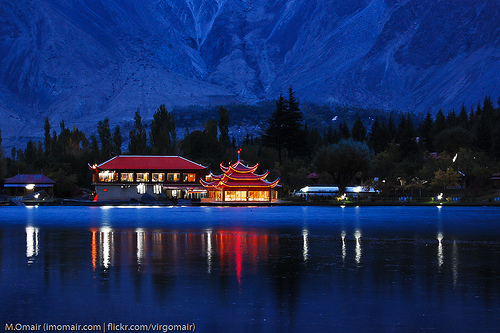
The enchanting valleys of Hunza, Shigar, Khaplu, Ishkuman, Naltar, Gilgit, Skardu, Chitral, Dir and the glacial lakes like Kachura, Satpara, Lalusar, and Saiful Muluk add unmatched grandeur to the beauty of the rugged mountains. The Northern Areas with its flora and fauna; the wildlife which can be seen in the form of snow leopards, ibexes and urials; and the variety of people who live in these areas with their diverse cultural heritage and millennia-old civilizations form a paradise for the tourists, trekkers, and mountaineers from all around the world.

The mountaineering & trekking season in Pakistan roughly runs between April and November, but some routes are only open for a couple of months, each year. 

Trekking in Pakistan is an unforgettable experience as it not only let you to experience the unexplored trails made by nature, but also bring the visitor directly in touch with the country and its people and helps you to appreciate the mountain environment.

Sunday, November 27, 2011

NATO Agression on Pakistani Posts


On the night of 25/26 November NATO helicopters and fighter aircraft carried out unprovoked firing on two Pakistani Army border posts in Mahmand Agency as a result of which 24 troops embraced shahadat and 13 were injured. There is absolutely no justification for this open and blatant murder, Pakistan has given complete list of all BOP's to NATO, all posts are clearly marked with Pakistani flag. NATO described the killings as a “tragic unintended incident” and said an investigation was underway. A Western official and an Afghan security official said NATO troops were responding to fire from across the border. What a stupid justification!!!! Self-defense against whom? Sleeping soldiers in their barracks? It is a clear massacre.


Rage grips Pakistan over the attack, Thousands gathered outside the American consulate in the city of Karachi to protest against the NATO attack. “America is attacking our borders. The government should immediately break ties with it,” said Naseema Baluch, a housewife attending the demonstration. “America wants to occupy our country but we will not let it do that.” 


Pakistan in return conveyed its 'rage' to the United States over this cross-border NATO air strikes, as it ordered a full-scale review of its frosty alliance with the US and NATO. The United States, which depends on Pakistan as a vital life-line to supply 130,000 foreign troops fighting in landlocked Afghanistan, on Sunday scrambled to salvage the alliance, backing a full inquiry and expressing condolences. The Defence Committee of the Cabinet (DCC) in its emergency meeting chaired by Prime Minister Syed Yusuf Raza Gilani on Saturday evening reiterated the resolve of the Pakistani people and Armed Forces to safeguard the country’s sovereignty, independence and territorial integrity at all costs.the DCC decided to close with immediate effect the NATO/ISAF logistics supply lines. The DCC also decided to ask the United States (US) to vacate the Shamsi Airbase within 15 days. 

People of Pakistan want strong actions against such incidents, halting the NATO supply is a good move but lets see will it last long. It is also important that whether Pakistan Government has the guts to kick Americans out of Shamsi Base.

Saturday, August 20, 2011

Destination Metropolis Pakistan......


Pakistan
Pakistan is a land of rich cultures and amazing diversity. From the mountainous areas of northern Pakistan to the southern seaports of Karachi, every destination along the way is a chance to discover another chapter of history.

Karachi
Karachi was founded as ‘Kolachi’, a fishing settlement established when a Baloch fisherwoman called Mai Kolachi took up residence and started a family. The bustling metropolis that later developed out of this settlement is known as Karachi.

The year 1947 heralded the creation of Pakistan and Karachi became the capital city. In the following years, the population increased rapidly due to influx of refugees and immigrants from nearby regions. Despite the rise in population, the city managed to maintain its cultural diversity, and continued to experience tremendous economic and cultural growth.

Being the main seaport of the country, Karachi boasts two of the region’s largest and busiest ports. It is Pakistan’s premiere centre of Banking and trade, as well as home to the country’s largest industries including textile, shipping, automotives and medical research.


Hyderabad
Hyderabad, the city of three hillocks, was founded in 1768 by Mian Ghulam Shah Kalhoro upon the ruins of Mauryan fishing village along the banks of River Indus.

It is regarded as the cultural capital of Sindh and is home to some of the province’s most talented artists who specialize in designing Ajraks. One of the most widely recognized symbols of honor in Sindhi tradition, the Ajrak is block printed fabric presented to guests on special occasions.

Hyderabad prides itself on being one of the largest bangle producers in the world and also boasts the longest bazaar in Asia, the Shahi Bazar. It is also home to the renowned Bombay Bakery, whose cakes and sweets recipes are a tightly kept family secret.


Sukkur
The city of Sukkur is affectionately called Darya Dino (gift of the River), as without the River Indus, the city would be a desert. The name itself originates from the Sindhi word Sakharu, which means ‘superior’. This fertile piece of land claim 80% of the variety of dates grown in Pakistan.

Sukkur is also home to one of the largest irrigation system in the world. The Sukkur Barrage, formally called Lloyd Barrage, was built under the British Raj on the River Indus and can water nearly 10 million acres of farmland through its seven large canals.


Larkana
Larkana is the fourth largest city in the north-western part of Sindh Province. Larkana is surrounded by fertile land in which all kind of fruits and vegetables are cultivated, including potatoes, melons, olives, oranges, peas, carrots, cucumber, mangoes and guava. Some 10 km from the city, sugarcane is cultivated and processed at the sugar mill established in 1990 in Nau Dero village, the birthplace of the former prime minister of Pakistan Zulfikar Ali Bhutto and where Benazir Bhutto was raised.

One of the world's oldest archaeological sites, Mohen-jo-daro lies 28 km away from the Larkana City. As a major archaeological site, it has its own airport, which is shared by Larkana. In Larkana District there are other archaeological sites, such as Jhoker Jo Daro.

Quetta
The name Quetta is derived from the Pashto word Kuatta, meaning fort, as the city is surrounded by three towering hills. It is an important trade and communication centre between Pakistan and Afghanistan, as well as a vital strategic location for the Pakistan Armed Forces.

Due to its horticultural diversity, Quetta is known as the “Fruit Garden of Pakistan” and is home to a variety of delicious fruits including plums, apples, peaches, apricots and guavas.

When in Quetta, one must try the Balochi specialty of “Sajji”, which is meat roasted to a delightful degree of tenderness and seasoned with mild spices.


Bahawalpur
Once known as the “City of Nawabs”, Bahawalpur today remains dotted with Palaces and Forts. Apart from its stately architecture, the city is an important trading centre for the surrounding and is located on the crossroads between Peshawar, Lahore, Quetta and Karachi. Due to its central location, one can easily journey into Cholistan, a sandy wasteland dotted with nomadic communities and lonely forts, or the Lal Suhanra National Park, an important wildlife reserve.

The areas surrounding Bahawalpur are fertile, which allow for agricultural exports to many parts of the world. The city also boasts a large market town known for its oranges, dates, wheat, sugarcane and cotton.

Multan
Known for its bazaars, mosques, shrines and ornate tombs, Multan is one of the oldest cities in the Asian sub-continent. It has traditionally been a melting pot of several distinct ethnic groups due to its location at the intersection of all four of Pakistan’s provinces. As a result, Multan today consists of Saraiki, Haryanvi, Punjabi, Baloch, Pashtun, Sindhi and Urdu-Speaking settlers who arrived at the time of independence in 1947.

The city has grown to become an influential political and economic hub for the country, with a dry port and excellent transport links. Multan is also famous for its handicrafts, cottage industries and most importantly livestock, which has led to development of dairy, meat and poultry processing as well as leather manufacturing industries.


Faisalabad
The original name of Faisalabad was Chenab Colony, followed by Sandalbar. It later came to be known as Lyallpur, in honour of its founder, Sir Charles James Lyall. In 1977, the name of the city was changed to Faisalabad, in honour of the late King Faisal of Saudi Arabia, who was held in high regard in Pakistan.

In 1880, the city was redesigned based on the Union Jack, with eight roads radiating from a centrally located grand clock tower or ghanta ghar. Each of these roads lead to a different bazaar. Faisalabad also has a strong industrial base including textile, jewellery, home furniture and pharmaceuticals, assisted by the expanding transport network which includes newly built motorways to Lahore and Rawalpindi. In fact, the textile industry of Faisalabad contributes more than 20% of the textile export market of Pakistan.

Lahore
Once known as the ‘Paris of East’, Lahore is a hub of cultural activities, fashion and post-modern art. A trip to this memorable city is an experience involving rich history, vibrant culture and delicious food.

Lahore is divided into two parts, Old Lahore and New Lahore. Old Lahore is the historical part where the Lahore Fort and Badshahi Mosque are situated. The lanes around these monuments are dotted with ancient havelis, or traditional mansions.

New Lahore is outlaying sub-urban area, which is home to politicians, actors, models, artists and socialities. It is a sparkling contrast to Old Lahore, with broad avenues, trendy boutiques and chic restaurants.


Gujranwala
The city of Gujranwala was named after the ancient tribe of Gujjars that settled in the area centuries ago. Located on the historical Grand Trunk Road, the city plays a vital role in the trade and industrial sectors of Pakistan.

Known for its wrestlers and bodybuilders, Gujranwala has produced some of the finest champions in sub-continent, which has led to its Punjabi nickname ‘Pehlwana da Shehar’ or city of wrestlers. Beside hosting a number of bodybuilding tournaments, Gujranwala also produces a large variety of agricultural goods, including rice, wheat, cotton, potatoes, barley, grains, melons and sugarcane. The city is also known for its manufacturing of ceramics, iron safes, metal utensils, textile, sanitary and tannery production.

Islamabad
In 1960, President Ayub Khan moved the capital of Pakistan from Karachi to the more central and logistically viable location of Islamabad. The city became a hub for all government activities, while its twin city Rawalpindi became the centre of all industrial, commercial and military activities.

Islamabad has also seen an expansion in information and communication technology with the addition of two software technology parks that house several national and foreign technological and IT companies.
Apart from being a net contributor to Pakistan’s economy, Islamabad is known for its stately architecture, which is a combination of modernity and old Islamic traditions such as Pakistan Monument and Faisal Mosque.

Peshawar
Capital of the Khyber-Pkahtunkhwa province and the administrative centre for the Federally Administrated Tribal Areas of Pakistan, Peshawar originally belonged to Gandhara and the Eastern Iranian Tribe of Scythian origin.

Pakistan is a condervative Islamic city with a rich history. The old city of Peshawar was once a heavy guarded citadel with high walls. Today, not much remains of the walls, but the houses are havelis still bear a vivid resemblance to an era gone by. Most of the houses are made of unbaked bricks, beautifully carved wooden doors are latticed wooden balconies.

The city boasts a wide array of goods ranging from gold and silver jewellery to traditional carpets, pottery and clothing. Artworks in wood, brass or semi-precious stones are also widely appreciated.

Friday, June 10, 2011

Rangers Killed a Youth in Karachi....Highly graphic and extremely violent! Viewer discretion is advised.

Rangers killed an "innocent-until-proven-guilty" boy in Karachi... Interestingly the first statement came off Rangers was it was a "typical encounter". Alhamdulillah this country now have the independent media and mobile phones with cameras and anyone's crimes will not be forgotten. Justice must be served! Criminals must be hanged, responsible must resign and this should happen ASAP!


Responsible should be hanged, they  misuse their powers, they r here to protect us if forces start doing this who will guard us. The crying mother of the 20 year old Sarfaraz Shah was  begging for the justice in a recent interview! Are we so dumb and deaf to wait until this happens with our sons and brothers?


Get up and raise your voices against these type of incidents...before (God Forbid) it happens to you or any of your friend.
Video Courtesy: Aawaz News.

Friday, May 27, 2011

Kharootabad Incident.......Brutality by Our Forces!!!!!!!!!!


I am shocked by seeing these Images. We all are responsible for this incident and all other incidents to come. No solid protest...No voices were heard against this incident, we all are sleeping as always. Its time for us to wake up otherwise it will be too late for our nation and for our country. Wake up and do justice to your vote, make these Politicians, these security forces accountable. We have given them the vote and we are equally responsible for their ill doings "Aik mazloom ka Qatl poori insaniyat ka Qatl hay". 6 innocent people are killed in this incident yet no one is dismissed or suspended from his service, neither the policemen nor the persons from FC, what a shame.

Tuesday, February 15, 2011

Destination PAKISTAN......Northern Areas.


The Northern Area is the most spectacular and fascinating region of Pakistan. It is here that the world's three famous mountain ranges meet - the Himalayas, the Karakorams and the Hindukush. The whole Northern Pakistan has come to be known as a paradise for mountaineers, climbers, trekkers, hikers and the most famous “Trout fish”.


GILGIT
At an elevation of 1,454 metres lies the Gilgit Valley. The quaint little town of Gilgit has spectacular scenic beauty. The peak tourist season is from April to October though you can visit the valley round the year. The maximum temperature in May is 33 C and the minimum 16 C and in September, maximum 28 C and minimum 11 C.

 PLACES TO VISIT
Gilgit Bridge:
The bridge over the fast flowing Gilgit River, at the end of its traditional bazaar, is the largest suspension bridge in Asia (182 metres long and 2 metres wide) permitting enough room for one jeep at a time to cross.
Kargah Buddha:
Located on a rock near Kargah Nullah (ravine), 10 km. from Gilgit town is a beautiful rock engraving of Buddha from 7th century A.D.
Monument of Taj Mughal:
A victory monument of Taj Mughal, built 700 years ago, is 30 km. jeep drive from Gilgit town.
Sher Qilla:
It is 38 km. from Gilgit - Trekking route links with Naltar valley. Trout fishing can be enjoyed in Sher Qilla Nullah and a small lake.
Singal:
About 61 km from Gilgit - Trekking route links with Chilas and Kohistan valley.
Gahkuch:
Headquarter of Ghizer District - Ideal place for trekking, good fishing sports and duck shooting in season. It is the gateway to Iskoman Valley. Government rest house and private hotels are available (73 km from Gilgit). Archaeological sites in village and a near by village Hatoon.
Naltar Valley:
Two hours jeep drive from Gilgit link rod. Government Rest house, Private hotels and a Ski slope, lush green Alpine forest with small lakes and glaciers, trout fishing in lake. Trekking routes link with Iskoman, Chalt and Punial valley.

SKARDU
Skardu, is 2,438 metres above sea level in the backdrop of the great peaks of the Karakorams. Balti people are a mixture of Tibetan and Caucasian stock and speak Balti, an ancient form of Tibetan. Due to the similarity of its culture, lifestyle and architecture with Tibet, Baltistan is also known as the "Tibet-e-Khurd" (Little Tibet). It borders on the Chinese province of Xinjiang and Indian-occupied Kashmir. The tourist season is from April to October. The maximum temperature is 27 C and minimum (October) 8 C. Apart from its incomparable cluster of mountain peaks and glaciers Baltistan's five valleys - Shigar, Skardu, Khaplu, Rondu and Kharmang are noted for their peaches, apricots, apples and pears. 

Skardu is linked to the Islamabad by PIA, which operates one flight daily. The air journey is full of thrills and would itself be regarded as the highlight of the visit. After following the same air route, which connects Gilgit to Islamabad/Rawalpindi, the plane turns right and flies over the gorge of the Indus River. Enormous rock faces rise on either side or at times it seems as if the wing tips of the plane would almost scrape against them. They never do. Baltistan is known as the "Tibet-e-Khurd", or Little Tibet since its life-style reflects that of the Roof of the World and the Land of Lamas.


HUNZA
The visitors to Hunza are overwhelmed by the rugged charm, the fragrant breeze singing through graceful Poplar trees and the velvet-like green carpet of wheat fields, set against the background of snow-covered mountains. Situated at an elevation of 2,438 metres, Hunza Valley's tourist season is from April to October. The temperature in May is maximum 27 C and minimum 14 C. The October temperature are: maximum 10 C and minimum 0 C. However, one can visit Hunza round the year.

Most of the people of Hunza are Ismaili Muslims, followers of His Highness the Aga Khan. The local language is Brushuski. Urdu and English are also understood by most of people. Karimabad, the capital of Hunza, offers an awe-inspiring view of Rakaposhi 7,788 metres. The snows of Rakaposhi glitter in the moonlight, producing an atmosphere at once ethereal and sublime.

The fairy-tale like castle of Baltit, above Karimabad, is a Hunza landmark built about 600 years ago. Stilted on massive legs, its wooden bay windows look out over the valley. Originally, it was used as the residence of the Mirs (the title of the former rulers) of Hunza.

Mountaineering And Hiking
Hunza is ideal for mountaineering, trekking and hiking. Most of the treks in Hunza area are in open zone, for which tourists do not need any permit. However special permits are required from the Ministry of Tourism, Islamabad for mountaineering, trekking in restricted zone & climbing peaks over 6000 metres.

CHITRAL
This 322 km.(200-mile) long mountain hideout, nesting high in the Hindu Kush range, is a place of fascinating scenic beauty and grandeur. Chitral’s collection of rugged mountains, sulphur springs, rivers teeming with trout, orchard-dotted slopes, friendly people and annual festivals are enchanting beyond description. For the modern day traveler this scenic region offers an exciting experience. It is easily accessible by air from historic city of Peshawar. Alexander of Greece marched through this valley in 327 B.C, and left behind traces of Greek heritage, which can still be seen.

Chitral District is bounded on the north, south and the west by Afghanistan and is separated from the Soviet Union by a narrow strip of Wakhan, a province of Afghanistan and from China by Hunza area. It lies between latitude 35 51 N and longitude 71 47’E.

Area And Elevation
Area: 14504 square meters (5,600 square miles).
Elevation: 1278-7700 meters (3700-25264 feet).
Climate
Summers are generally pleasant but the winters are extremely cold. Chitral has unpredictable during spring with frequent rains and snowfall. Autumn is pleasant with mild temperatures.
Tourist Season
Ideal time for visiting Chitral is from June to September.
Population
1,59,230
Majority of the people are Muslims. The only non-Muslim ethnic minority in the Chitral valley are the Kafir Kalash. Numbering about 2,500 to 3,000 they inhabit Birir, Bumburet and Rambur valleys in the south of Chitral. Their life style is characterized by their own ancient and religion.
Languages
The local dialect is ‘Khowar’ (Chitrali). Urdu is understood by a large number of people while Pushto is spoken and understood in Chitral and Drosh.
Costumes
The women wear ‘shalwar-kameez’ (long shirts with baggy trousers) and ‘dupattas’ (flimsy scarves draped round the Shoulders).
In winter the man wear ‘shuqa’, loose ,long woolen gowns with long sleeves. The popular headdress is ‘pakol’ which is also of woolen material.
Chitral is famous for its polo tournaments, held from April to July and September to October.

KALASH
Elevation: 1670-2309 meters (5,476-7,576 feet).
Distance: 32-36km. (20-22 miles) south of Chitral.
By jeep: 2 ½ hours

These are a group of three small valleys: Brir, Bumburet and Rambur. Brir lies at the southern most tip of Chitral at a distance of 34 km (21 miles) and is easily accessible by jeep-able road via Ayun. It is especially ideal for those not used to trekking. Bumburet, the largest and the most picturesque valley of the Kafir Kalash, is 36 km.(22 miles) from Chitral and is connected by a jeep-able road.


Rambur is 32 km (20 miles) from Chitral, the road is jeep-able. Foreign tourists require permits for visiting the Kalash valleys. Permits are issued free of cost by the Deputy Commissioner, Chitral, Tel: 1. Foreign visitors have to pay a toll tax of Rs.10 per person while Re. 1.00 per person is charged from domestic tourists.

These valleys have an alpine climate. The people inhabiting these valleys are the primitive pagan tribes of Pakistan, who are known as Kafir Kalash, which means the wearers of the black robes. Their origin is cloaked in controversy. A legend says that soldiers from the legions of the Macedonian conqueror, Alexander, settled in Chitral and are the progenitors of the Kalash.

They live in small villages built on the hillsides near the banks of streams. Their houses are constructed of rough-hewn logs and are double storeyed because of the steepness of the slopes. Kalash are very lively people and are famous for their lively religious festivals namely: Chilimjusht (spring), Phool (September) and Chowas (from 21st December for a week). The Kalash love music and their instruments are drums and flutes. Their colorful dances impart a feeling of peace, joy and contentment. If you join them in their dance, they interpret it as a sign friendship and will open their hearts to you and reveal some of their mysteries, their joys and sorrows. You depart with a sense of poignancy and nostalgia for these beautiful children of nature and nagging fear that all the sweetness and innocence may soon be swept away forever by the power and intolerance that often hide themselves under the banner of progress.

GARAM CHASHMA
Elevation: 1859 meters (6,100) feet). 
Distance:45 km, (28 miles) north-west of Chitral. By jeep: hours.

This un-spoilt enchanting valley of orchards, verdant fields and snow clad peaks is renowned for its boiling sulphur springs which are famous for healing effect on skin diseases, gout, rheumatism and chronic headaches. For the convenience of tourists “humans” (baths) have been constructed near the springs. Foreign tourists are requested to pay a toll tax of Rs.5.00 per person.